
Vinyl Siding Installation in Maine
Siding That Handles Impact Without Repainting
Vinyl Siding in Bangor and beyond for homes requiring exterior cladding that withstands wind-blown debris and seasonal moisture
Vinyl siding consists of extruded PVC panels formed with an interlocking profile along the top edge and a nailing hem along the bottom, designed to hang from fasteners rather than being rigidly attached—this allows the material to expand and contract with temperature changes that can exceed one hundred degrees between winter and summer surface temperatures. The panels overlap horizontally to shed water downward, with each course supporting the one above it while remaining able to move independently as the material dimensions change. Smith Builders installs vinyl siding on residential and commercial buildings throughout Maine, working with a cladding system that requires no painting, resists moisture absorption that causes wood rot, and replaces damaged panels individually without disturbing adjacent sections.
The installation process involves fastening panels through slots in the nailing hem, positioning fasteners in the center of each slot rather than at the ends, and leaving deliberate gaps at trim pieces to accommodate expansion without buckling. Proper technique requires understanding that vinyl behaves differently in cold weather—material becomes brittle below freezing and requires different cutting and handling methods than installation during warm months when the same panels are flexible.
Arrange an on-site consultation to assess your current siding condition and determine what trim and accessory pieces your building configuration requires.
READY TO GET STARTED ON YOUR Vinyl Siding?
REQUEST A QUOTE NOW!
Note: By providing a telephone number and submitting the form you are consenting to be contacted by SMS text message. Message & data rates may apply. Reply STOP to opt out of further messaging.
By opting in to receive promotional updates, you agree to receive SMS messages from Smith Builders related to roofing services, estimates, project updates, appointment reminders, and general customer communication. You may reply STOP to opt-out at any time. Reply HELP to (207) 573-9000 for assistance. Messages and data rates may apply. Message frequency will vary. Learn more on our Privacy Policy and Terms & Conditions.
The Difference Between Proper and Improper Vinyl Siding Installation
Vinyl siding installation begins with applying a weather-resistant barrier over the wall sheathing, followed by installation of corner posts, J-channel around windows and doors, and starter strip at the foundation line that supports the first course of siding. Each panel slides upward into the previous course until it locks, then gets fastened loosely enough that the panel can slide horizontally within the nailing slots—over-driven fasteners prevent this movement and cause panels to buckle when they expand during direct sun exposure.
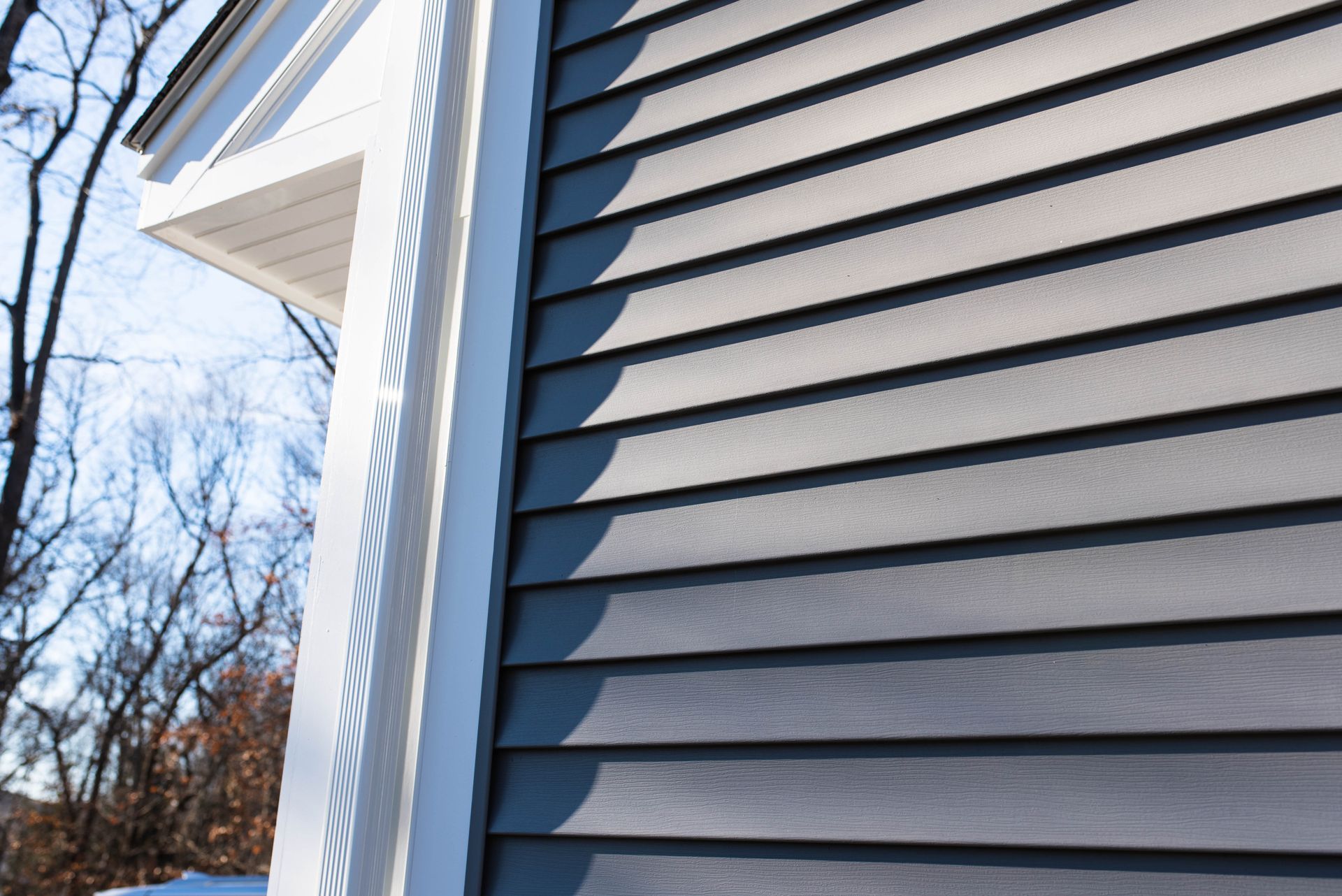
Once installation is complete, the building exterior appears uniform in color and texture, with clean trim lines around openings and no visible fasteners on the field of the wall. Wind no longer lifts loose siding edges, water stops entering wall cavities through gaps in deteriorated cladding, and the exterior requires only periodic washing rather than the scraping, priming, and painting cycle that wood siding demands every five to eight years.
Vinyl does not prevent all moisture issues—the system is designed as a drainage plane that sheds bulk water while allowing some wind-driven rain to pass through joints to the weather barrier underneath, which must be properly installed and lapped to direct this moisture downward and outward. The material also becomes damaged by significant impacts such as hail larger than one inch or debris driven by high winds, though individual panels can be removed and replaced without affecting surrounding areas..
What Property Owners Usually Ask
Homeowners considering vinyl siding want to understand how the material performs in Maine's climate and what maintenance or limitations apply to the system.
How does vinyl siding perform in freeze-thaw cycles?
The material itself does not absorb water, so freezing does not cause the expansion damage that affects wood or fiber cement, but the panels become more brittle in cold temperatures and can crack if impacted by objects such as thrown snow or ice chunks sliding from the roof above.
What causes vinyl siding to warp or buckle?
Improper fastening that prevents the panels from moving as they expand creates stress that shows up as waves or buckles in the siding surface, and this installation error cannot be fixed without removing and reinstalling the affected sections using correct technique.
Why do vinyl siding colors fade over time?
UV radiation gradually breaks down the pigments in the vinyl, with darker colors showing more noticeable fading than lighter shades, though modern formulations include UV inhibitors that significantly slow this process compared to vinyl manufactured twenty years ago.
When should vinyl siding be replaced?
Replacement becomes necessary when widespread cracking affects multiple panels, when the material has faded to the point where new replacement panels no longer match, or when the underlying wall sheathing has deteriorated due to moisture intrusion that the siding was installed over rather than addressing.
What wind speeds will vinyl siding withstand?
Properly installed vinyl rated for the region typically resists winds up to one hundred ten miles per hour before panels begin to pull free, though performance depends heavily on correct fastening technique and ensuring that all trim pieces are properly secured to provide continuous interlock along panel edges in Glenburn's exposure conditions.
Smith Builders handles vinyl siding installation for properties across Maine that need durable exterior cladding without ongoing paint maintenance. Contact our office to schedule a project assessment that reviews your wall condition, discusses color and profile options, and identifies any structural repairs needed before new siding installation begins.
Bundle & Save: Smith Builders Roofing & Exterior Services




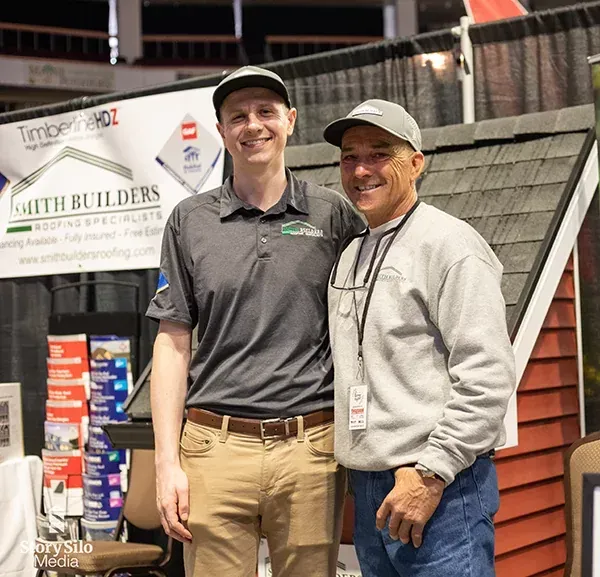
We're Proud to Be A Locally-Owned Maine Roofing & Exteriors Contractor; Trusted By Our Customers Since 1993.
We are a Maine company protecting Maine properties. We’ve replaced hundreds of roofs throughout the state and we stand by the work that we do.
We have a transparent and educational sales process and communicate with you through every step of the process. You’ll have a dedicated project manager who will be your point-of-contact from start to finish.
You have plenty of options when it comes to replacing your roof. Why choose Smith Builders? Here are just a few reasons:
Financing Available
We partner with Payzer to offer financing to our customers.
We also accept cash, checks or credit cards (there is no fee to pay with a credit card)
5-Star Customer Service
From the first time you reach out to us until the work is done you'll receive excellent customer service. You'll have a dedicated Project Manager who knows your project inside and out and can answer any questions you may have before, during and after the installation process.
